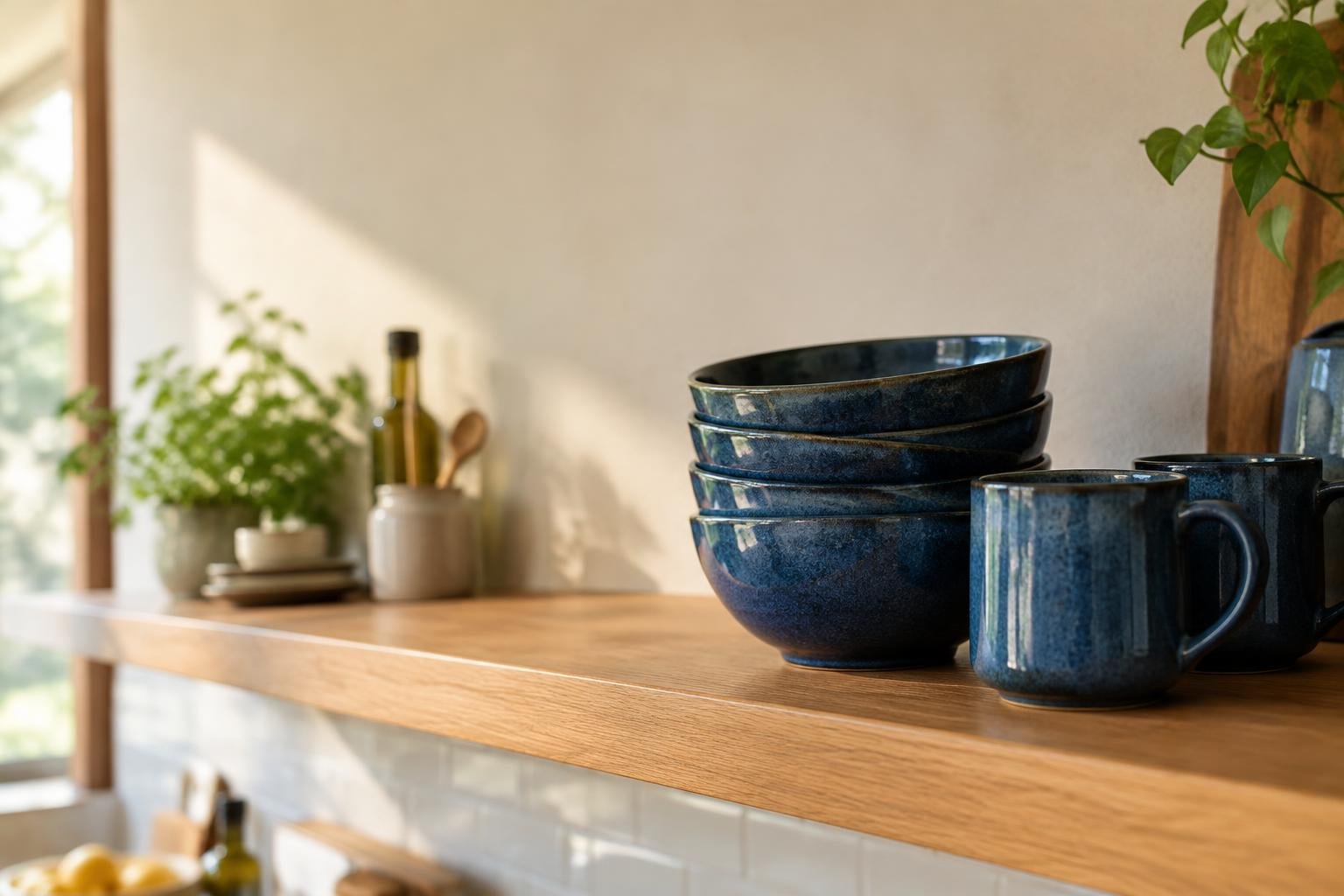
An open shelf is a lovely way to show handmade pottery, and it keeps your favorite pieces within reach. The trick is to balance looks with practicality. Start with the things you use every day, and keep them at a comfortable height so you never have to stretch or hunt for a cup.
Before you place anything, look at the shelf itself. Depth matters more than most people expect. A shelf that is too shallow leaves plates and wide bowls hanging over the edge, while a very deep one hides whatever sits at the back. Something close to the width of your largest piece, with a little room to spare, tends to work well.
It also helps to take everything out and group it before anything goes up. Gather mugs with mugs, bowls with bowls, and small pieces on their own. Seeing the groups on a table shows you how much you really have, and which pieces deserve the prime spots at eye level and which can sit higher up.
Arranging Bowls and Mugs
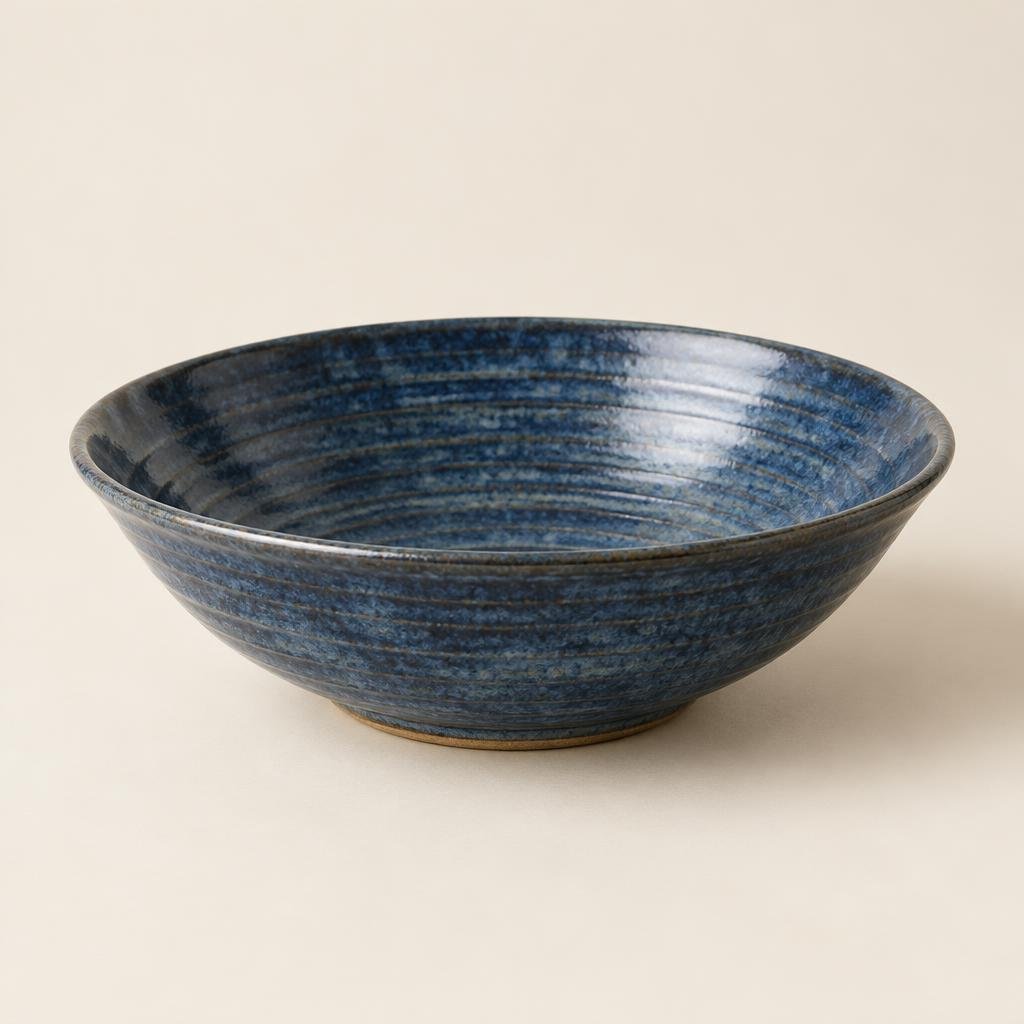
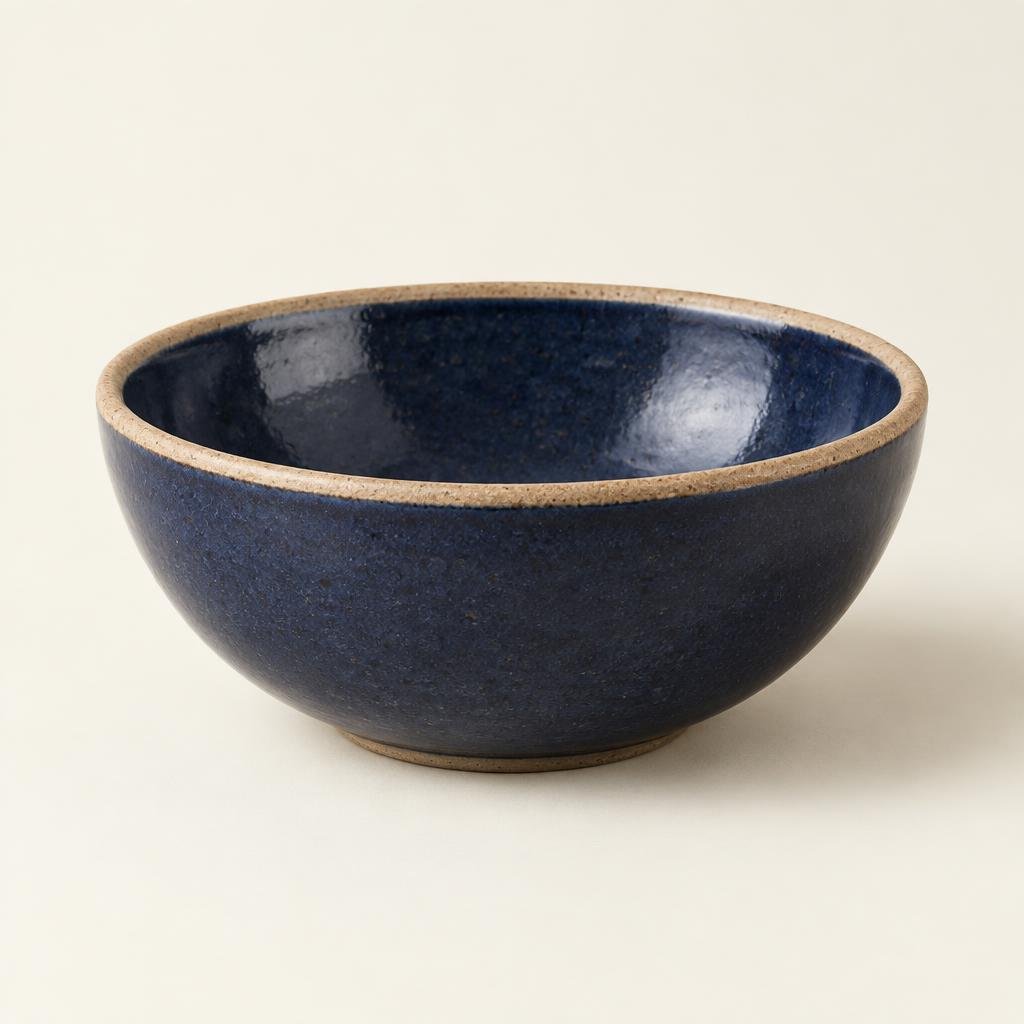
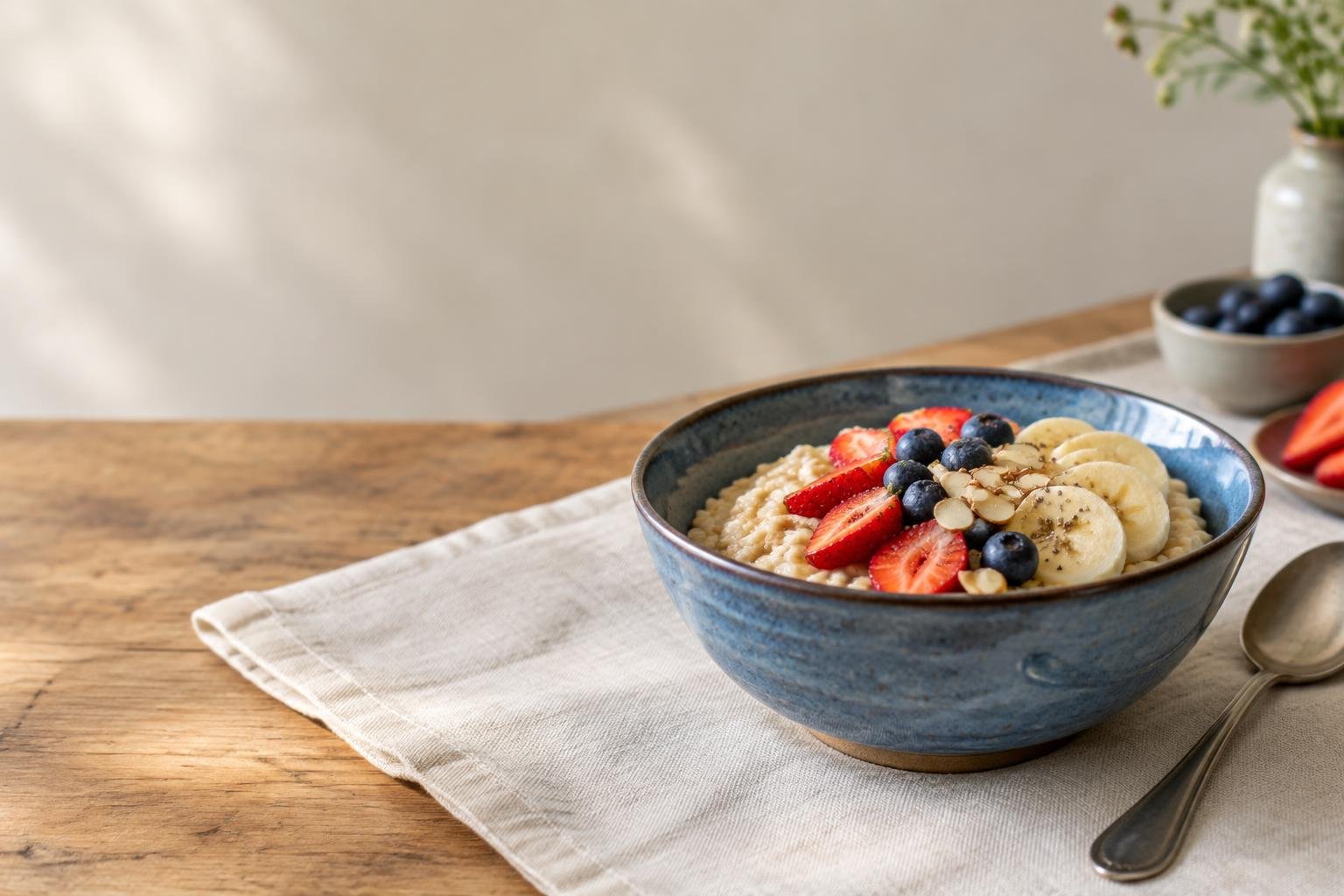
Bowls stack well, so put them at the bottom or in the middle where they take up little space. A stack of three or four of the same size looks tidy and saves room. Keep the stack modest, because heavy stacks of stoneware can be awkward to pull from the bottom. That way the top bowl lifts away easily.
Nesting works best when the bowls were made to fit together. Hand-thrown pieces vary slightly, so two bowls of the same nominal size may not sit snugly. Try a few combinations and keep the ones that settle evenly. A wobbling stack looks careless, and it can chip a rim when you lift the top bowl away.
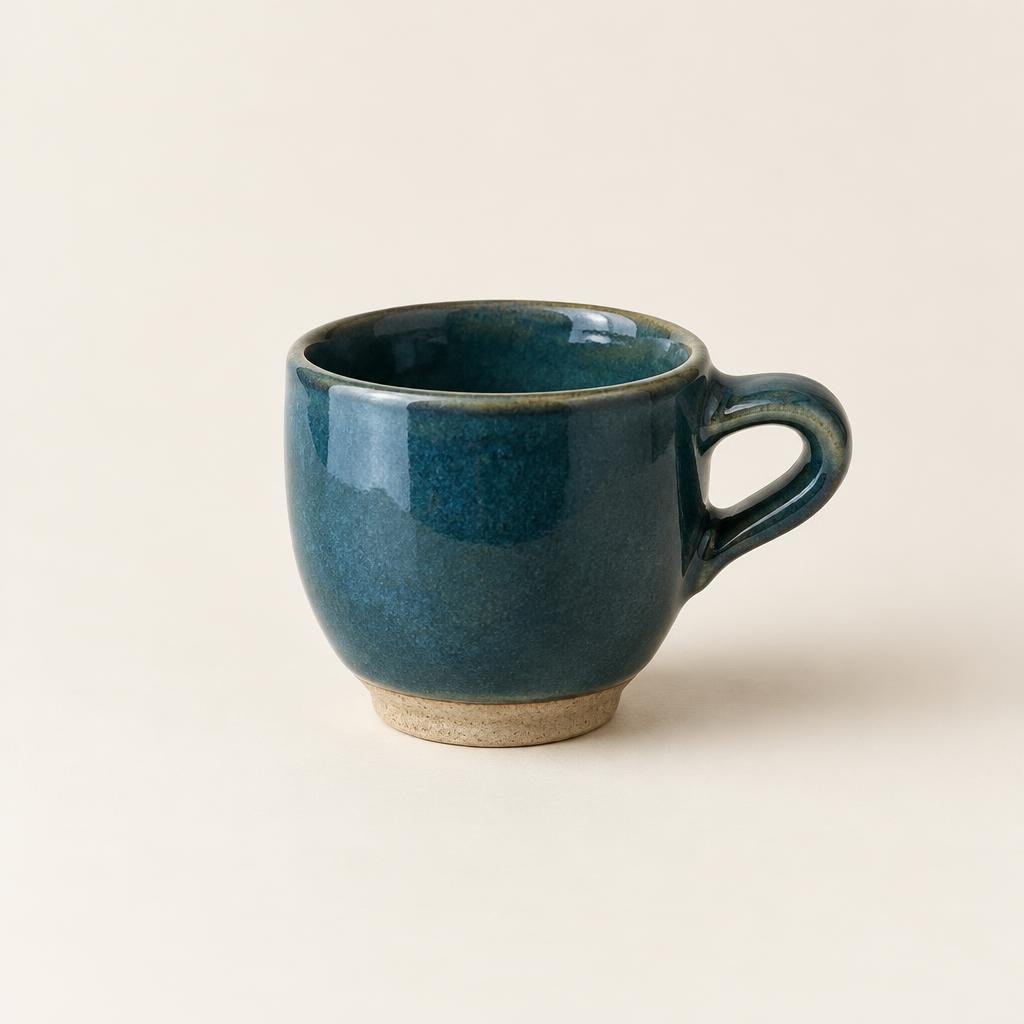
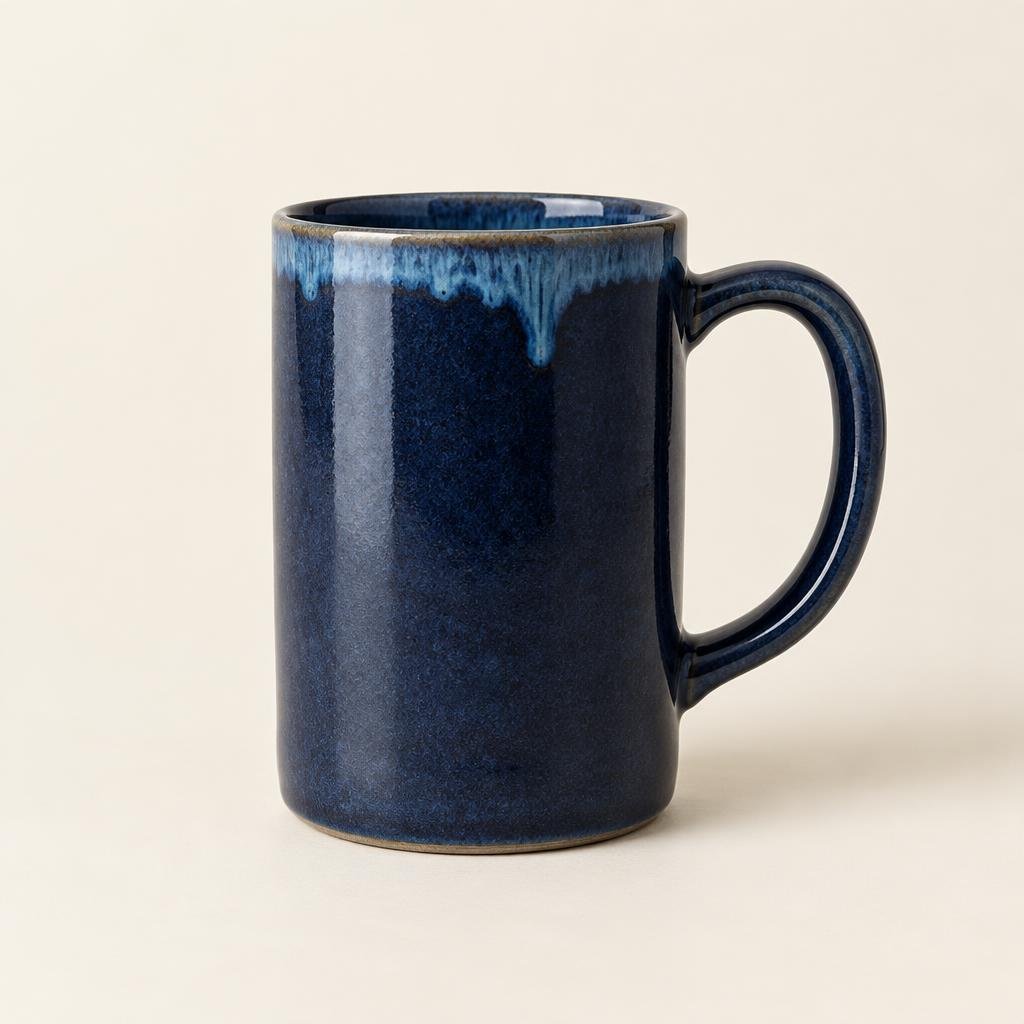
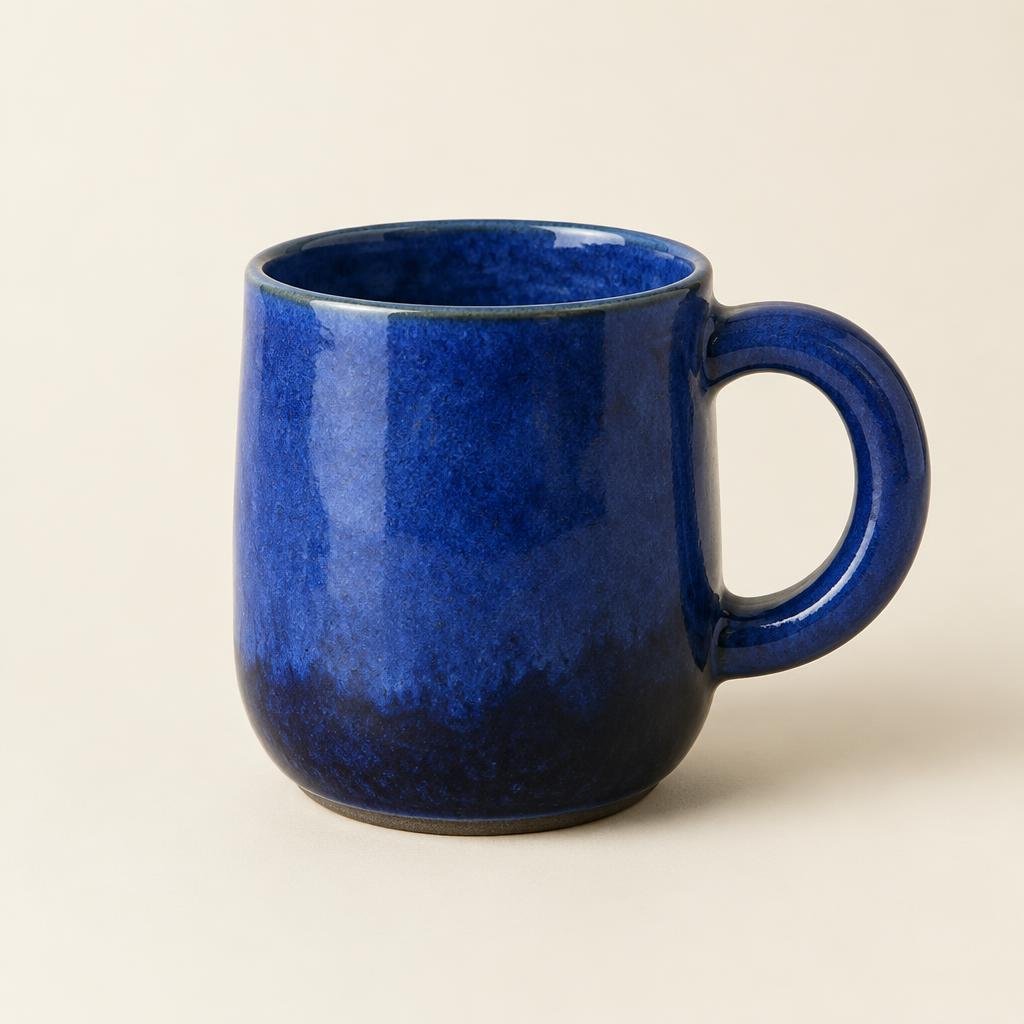
Mugs look best when they are not crowded. Leave a little space between them so the handles are easy to grab and the glazes can be seen. Turn the handles in the same direction for a calm, orderly look, or mix directions if you prefer something more relaxed. Neither choice is wrong.
Hooks are another option if the shelf has room underneath. Hanging mugs by the handle frees up shelf space and keeps them airing out. The trade-off is that hooks put all the weight on the handle and leave the mugs exposed to knocks, so they suit light, sturdy cups better than large, heavy ones that you might bump while reaching past.
Color, Texture and Contrast
Color is a gift on a pottery shelf. A range of blues, from cobalt to navy, sits together without any effort, because the shades share the same feel. If you want contrast, add a wooden board, a few plants or a plain white plate, and let the blue do the talking.
Glaze finish matters as much as hue. A glossy glaze catches light and bounces it around, while a matte or satin surface looks softer and quieter. Mixing the two gives a shelf some depth, but too many different finishes can feel busy. Pick one dominant finish and let the other appear in a few accents.
Height is the other quiet tool. A row of pieces at the same level can look flat, so lift a few on a small wooden riser or a stacked bowl. Tall pieces such as planters or pitchers anchor the ends, and lower ones fill the middle. The eye then moves along the shelf instead of stopping at one spot.
Planters deserve a thought of their own. A plant on a shelf brings life and a soft green against the glaze, but a pot with a drainage hole needs a saucer so water does not mark the wood. Trailing plants look good spilling over the edge, while upright ones suit shelves with little space above.
Looking After the Surface
Think about the surface the pottery sits on. Wood is warm and forgiving, and a little felt or cork under a heavy piece can protect it from scratches. Because stoneware feet are often unglazed, they can scratch a smooth finish if they are dragged across it. Lifting rather than sliding solves most of the trouble.
Stoneware is fired hard and holds up well to daily use, but a shelf still collects dust and kitchen grease if it sits near the stove. A quick wipe of the shelf and a rinse of pieces that have sat unused keeps everything fresh. Dry the unglazed feet well before putting a piece back, so no damp lingers on the wood.
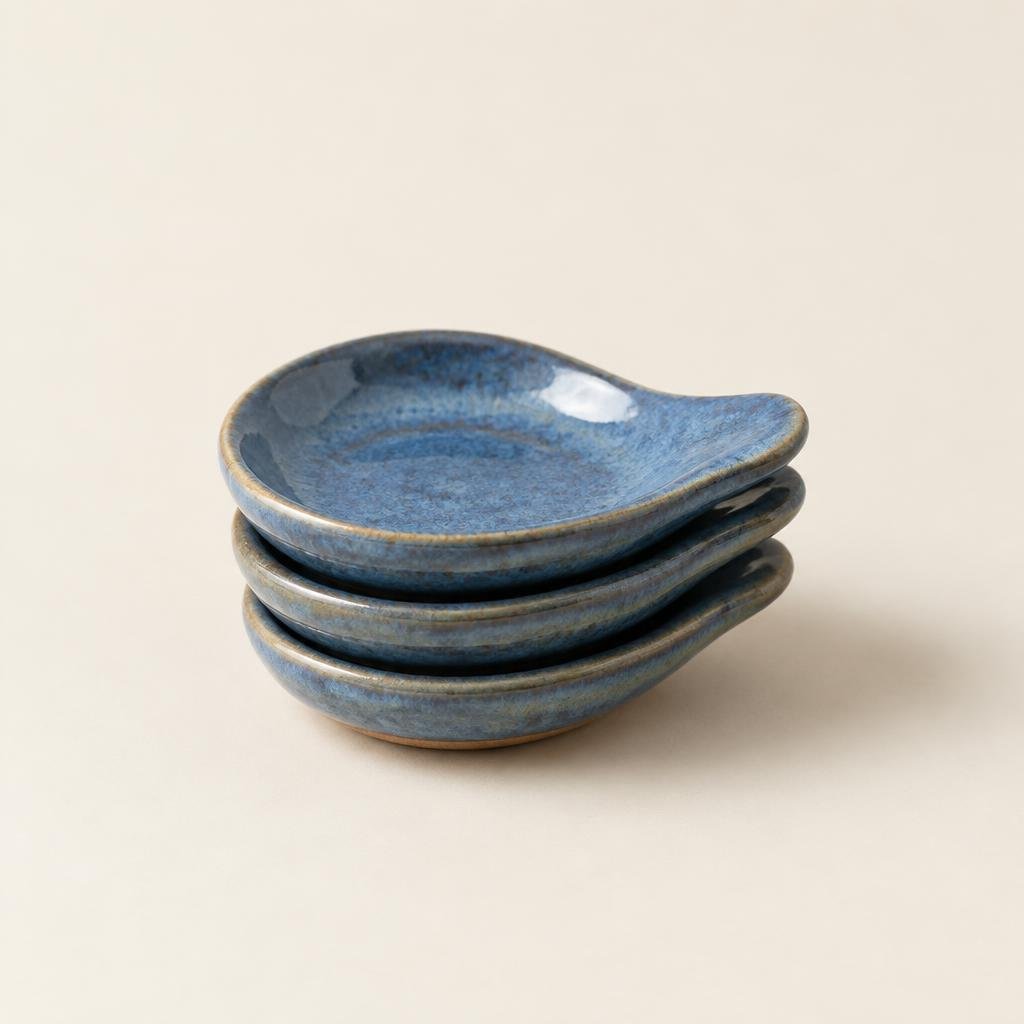
Small pieces such as spoon rests and espresso cups are good for filling gaps. They add variety in height and shape. Keeping a spoon rest near the stove makes it genuinely useful, while one on the shelf is a small decoration. Group two or three small things together rather than scattering them, since a lone tiny piece can look lost on a long board.
Rotate things now and then. Move a favorite mug to the front, swap a bowl for another, and the shelf will feel fresh without buying anything new. A shelf that changes with your habits looks lived in. It also spreads the wear evenly, so no single piece ends up doing all the work while the others gather dust. Seasons offer a natural prompt, with lighter glazes in spring and deeper tones as the weather cools.
Most of all, keep the shelf in use. Pottery is made to be handled, and a shelf of pieces you actually reach for will always look better than one arranged only for show. If a gap appears because you took a mug to the table, leave it. The gap is part of the story. A shelf that is a little imperfect shows that people live with these things, and that is the best display of all.