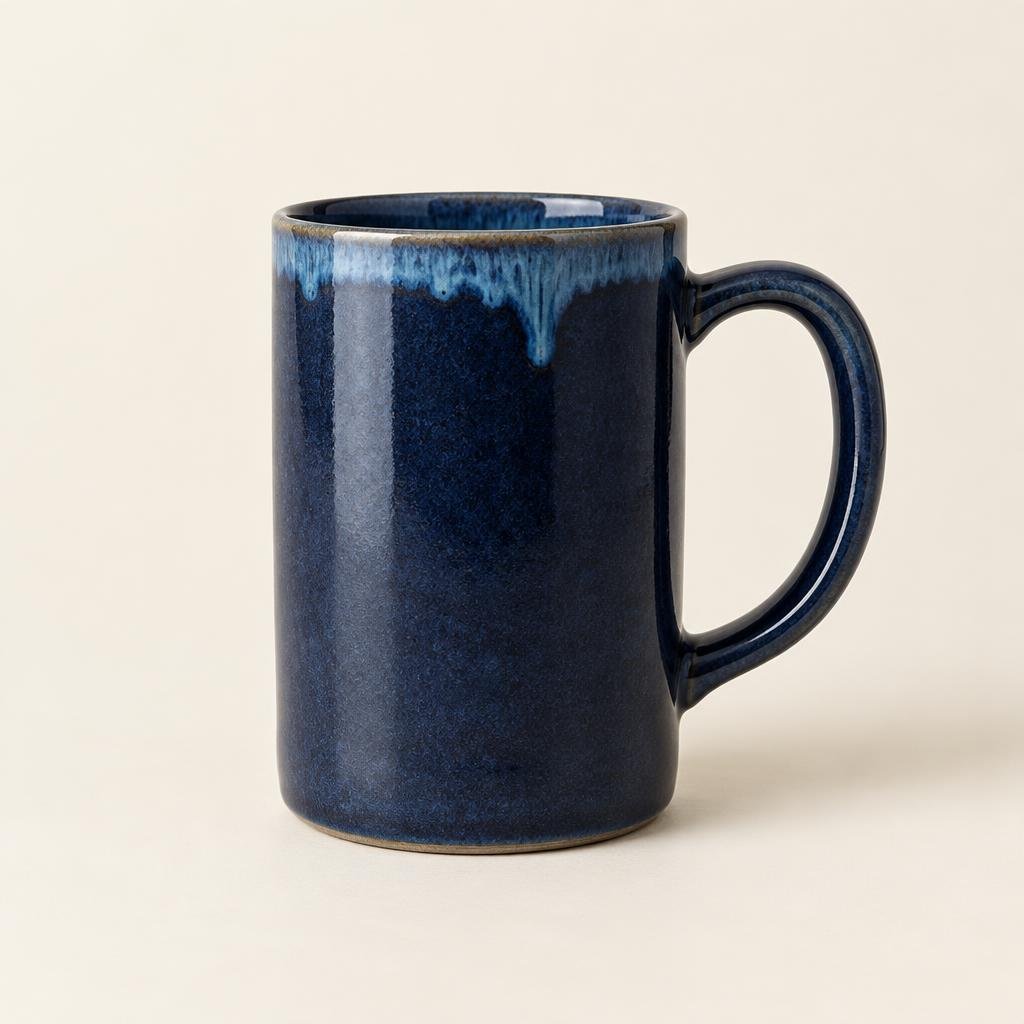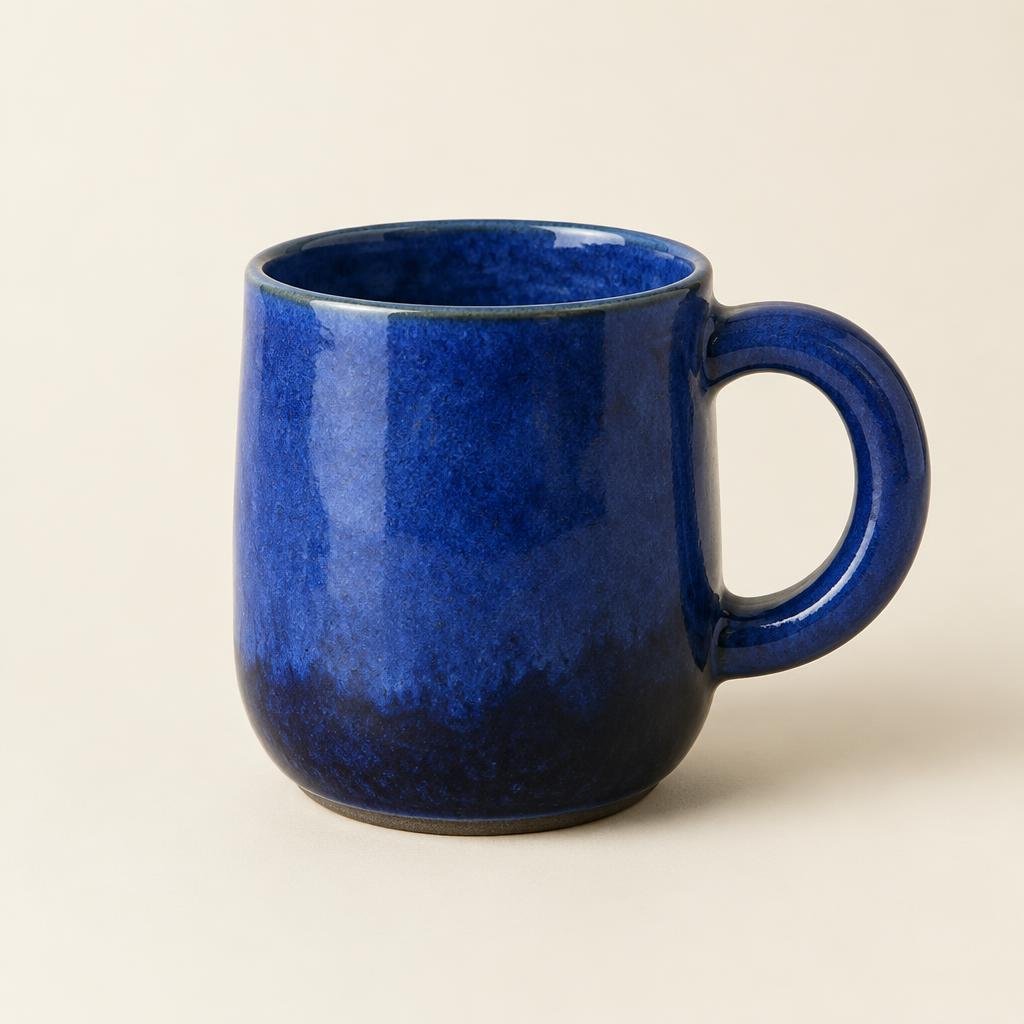

A mug is the piece of pottery most people use every single day, so it is worth choosing one carefully. Start with how you drink. If you like a long, slow cup of coffee, a tall straight-sided mug keeps the drink in one deep column and tends to hold heat well. If you reach for tea or something quick, a rounded mug feels friendly in the hands and cools a little faster.
The reason is simple physics. A drink loses heat mostly through its open surface, so a wide, shallow mug lets steam escape quickly while a narrow one keeps the top small. Neither shape is wrong. It depends on whether you want your drink to stay hot for an hour or be ready to sip within a few minutes of pouring.
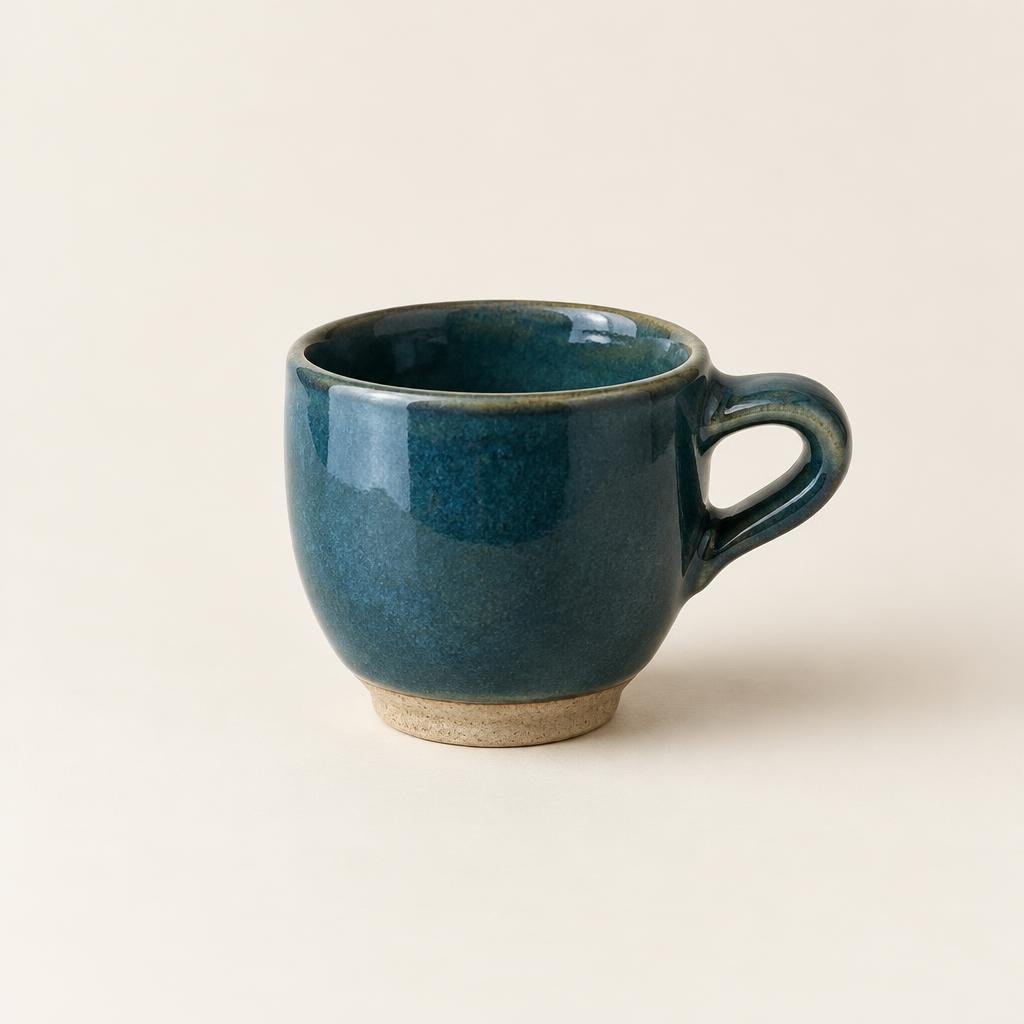
The handle matters more than most people expect. A thick looped handle gives room for several fingers and feels sturdy when the mug is full. A D-shaped handle is neater and suits a narrower hand. A pinched handle, common on espresso cups, is made for a thumb and one finger and suits a small, short drink.
When you test a handle, notice where your knuckles land. If they bump the side of the mug, the gap is too tight. Also check how the handle joins the body. On a well-made mug the joins are smooth and the handle sits roughly in line with the rim, so the weight of a full cup stays balanced rather than tipping toward your wrist.
Weight and Balance
Weight is the next thing to notice. Stoneware is denser than many other ceramics, and a hand-thrown mug will usually feel more substantial than a mass-produced one. Some people love that heft, and others prefer something lighter. Pick one up if you can, or think about how you feel holding a full, heavy cup first thing in the morning.
Thickness of the walls is what drives weight. Potters throw walls thicker or thinner depending on the clay and the form, and a thin wall takes skill to keep even. Thick walls hold warmth longer and feel solid, but they add up in the hand. It helps to imagine the mug filled to the brim before you decide.
Balance is a quieter quality. An empty mug that feels fine can feel top-heavy once filled, especially if the handle is small and the body is tall. Hold it by the handle alone and tilt it slightly, as you would to take a sip. If your wrist has to work to keep it level, the proportions may not suit you.
Look at the lip. A thinner rim feels delicate against the mouth, while a thicker one feels rounder and more forgiving. Neither is better, but they are different experiences. A slight lip that flares outward can also make pouring and sipping easier, which is something you only notice after a few weeks of use.
Rims also affect how a drink reaches your mouth. A rim that curves outward sends liquid forward in a smooth stream, while a straight rim delivers it more directly. Taller mugs with straight walls can feel a bit abrupt to some people, and others like exactly that. It is a matter of habit, so pay attention to what you already enjoy.
Glaze, Color and Care
Glaze changes the feel as well. A glossy glaze is smooth and easy to wipe clean, while a glaze that breaks over the edges shows the clay beneath. Darker glazes can hide small stains from tea and coffee over time. The way a glaze pools and darkens near the base is part of the character of handmade work, not a flaw.
Glaze is glass fused onto clay in the kiln, and its look depends on the recipe, the thickness of the application and the firing. That is why two mugs from the same batch can differ slightly. Where glaze runs thin it often turns lighter or shows speckles, and where it gathers it deepens in color. These variations are what make each piece distinct.
Inside the mug, a fully glazed surface is what keeps the clay from absorbing liquid and holds up to daily washing. Run a finger around the inside and base. You want it smooth, with no rough or dry patches. The bottom of a stoneware mug is often left bare, so a quick wipe dry after washing keeps it tidy on the shelf.
Tea and coffee leave a faint ring over time on almost any mug, and that is normal use rather than damage. A soft sponge and a little baking soda paste usually lifts it. Avoid harsh scouring pads, which can dull a glossy surface. Gentle habits keep stoneware looking good for years, and the patina of use is part of its charm.
Living with Your Choice
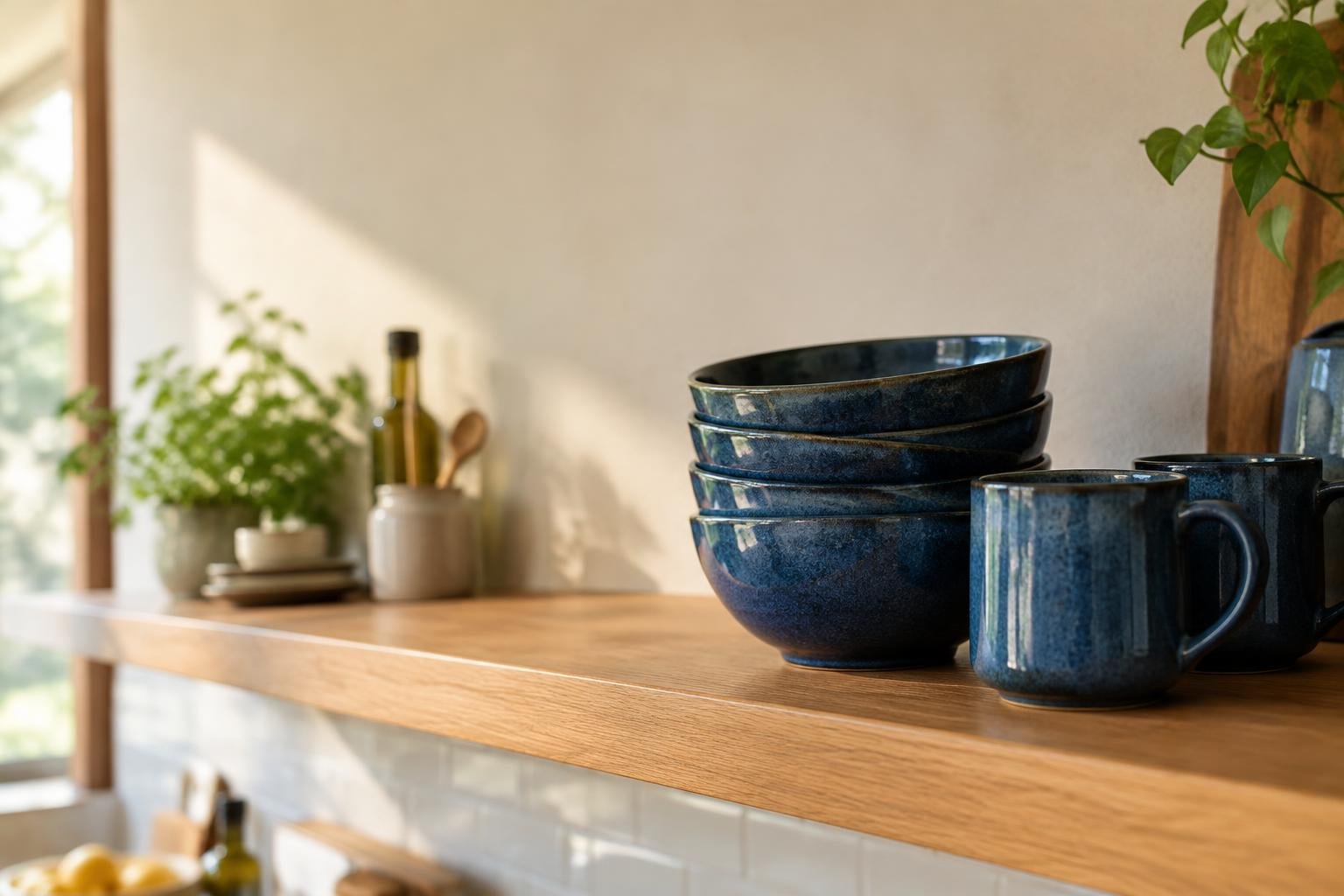
Think about where the mug will live. If it goes on a shelf in plain view, color and shape may matter most. If it goes in a busy kitchen, consider whether it fits your cupboard, your dishwasher rack and your habits. A mug you actually reach for is better than one you save.
Stacking is worth a thought. Mugs with wide, flared bodies or large handles can be awkward to nest, and a tall mug may not clear a shelf with little headroom. Measure the space if you are unsure. A mug that fits comfortably with the rest of your dishes tends to be used more often, and use is what pottery is for.
It can help to own two shapes. One larger mug for slow mornings and one smaller cup for something quick covers most days. Once you start drinking from handmade pottery, ordinary mugs often feel a little anonymous by comparison. Having a pair also takes pressure off any single choice, since you can learn what you prefer by switching between them and noticing which one you pick up without thinking.
Finally, trust your instinct. The right mug feels balanced when it is full, sits comfortably in your hand and makes you glad to see it. That is a better test than any list of measurements. Everything above is only a way of putting words to a feeling you will probably recognize the moment you hold the right one. Take your time, and let your hands tell you.